ServicesWhole-Home Filtration
Whole-Home Filtration in Youngtown
This filter goes on your main water line, so every tap and shower in your home gets treated water. It pulls out chlorine taste, smell and grit. We walk you through what it removes, what it leaves in, and what the system costs installed before any work starts.
What a whole-home filter actually does
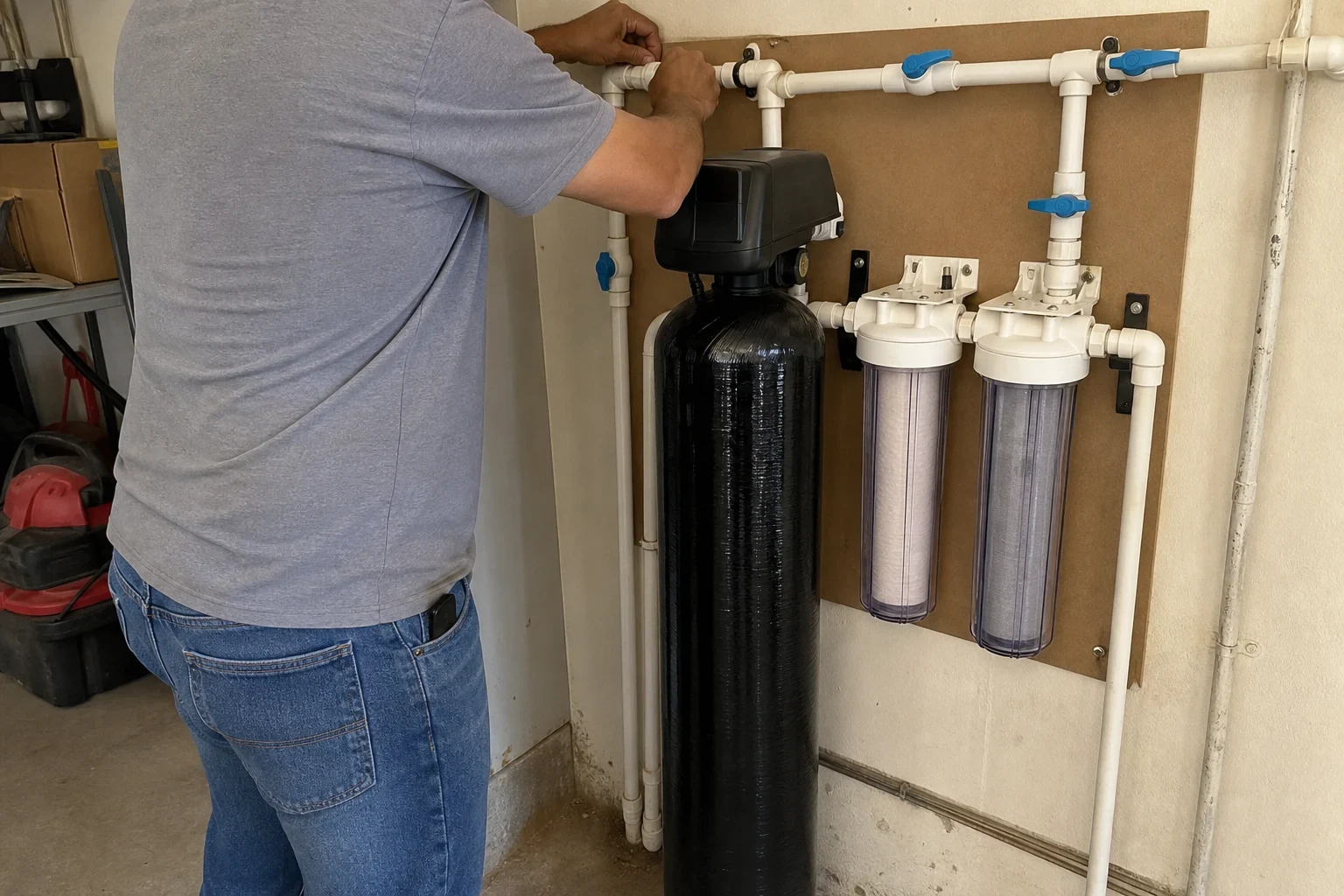
Your water utility adds a disinfectant to keep water clean on its trip through miles of pipe. That part is good. The trouble is the taste and smell ride along to your shower and kitchen sink. A whole-home filter is a tank full of carbon media cut into your main line. As water flows through, the carbon holds onto the chlorine or chloramine so the rest of the house never gets it.
Here is the plain version of what it won't do. Carbon does not soften water, so it won't stop white scale on fixtures. That's a job for a water softener. It also isn't the best tool for drinking water down to trace levels. For that, a reverse osmosis unit under the sink does more. Plenty of homes end up with a filter and one of those, but some only need the filter.
If you're not sure which problem you have, start with our free water test. It has zero obligation, and it tells us what to recommend.
What comes with the install
- 01
The right carbon media
Plain carbon handles chlorine well. If your water uses chloramine, we use catalytic carbon, which is built for it. We tell you which one you're getting and why.
- 02
A sediment stage when it helps
A small prefilter traps sand and grit up front. With the coarse stuff stopped early, the carbon tank lasts longer between changes.
- 03
A bypass valve
We plumb in a bypass so you can send water around the filter for a media change or a repair. You never have to shut off the whole house to service it.
- 04
Partner plumbers do the work
Our partner plumbers, who hold a license and carry insurance, handle every install. They tie into your main line to code on copper, CPVC or PEX.
- 05
Install included
Install is included with our water treatment systems. The price we give you by phone is the price of the system in place and running.
Questions about Whole-Home Filtration?
Call(480) 906-2640Signs a whole-home filter fits your home
The shower smells like a pool
Hot water lets chlorine escape as vapor, so you notice it most in the shower. A kitchen filter can't fix that. A filter on the main line can.
You buy pitcher filters every month
If everyone in the house runs tap water through a pitcher, the taste is bothering you. A whole-home system covers every faucet at once.
Grit in faucet screens
Small specks in the aerators or the washer inlet point to sediment. A prefilter stops it at the main line.
Your test shows disinfectant, not hardness
If the test shows mostly chlorine and the hardness reading is low, a carbon filter alone may be all you need. If hardness is high too, we'll say so.
How the job goes
- 1
Free water test
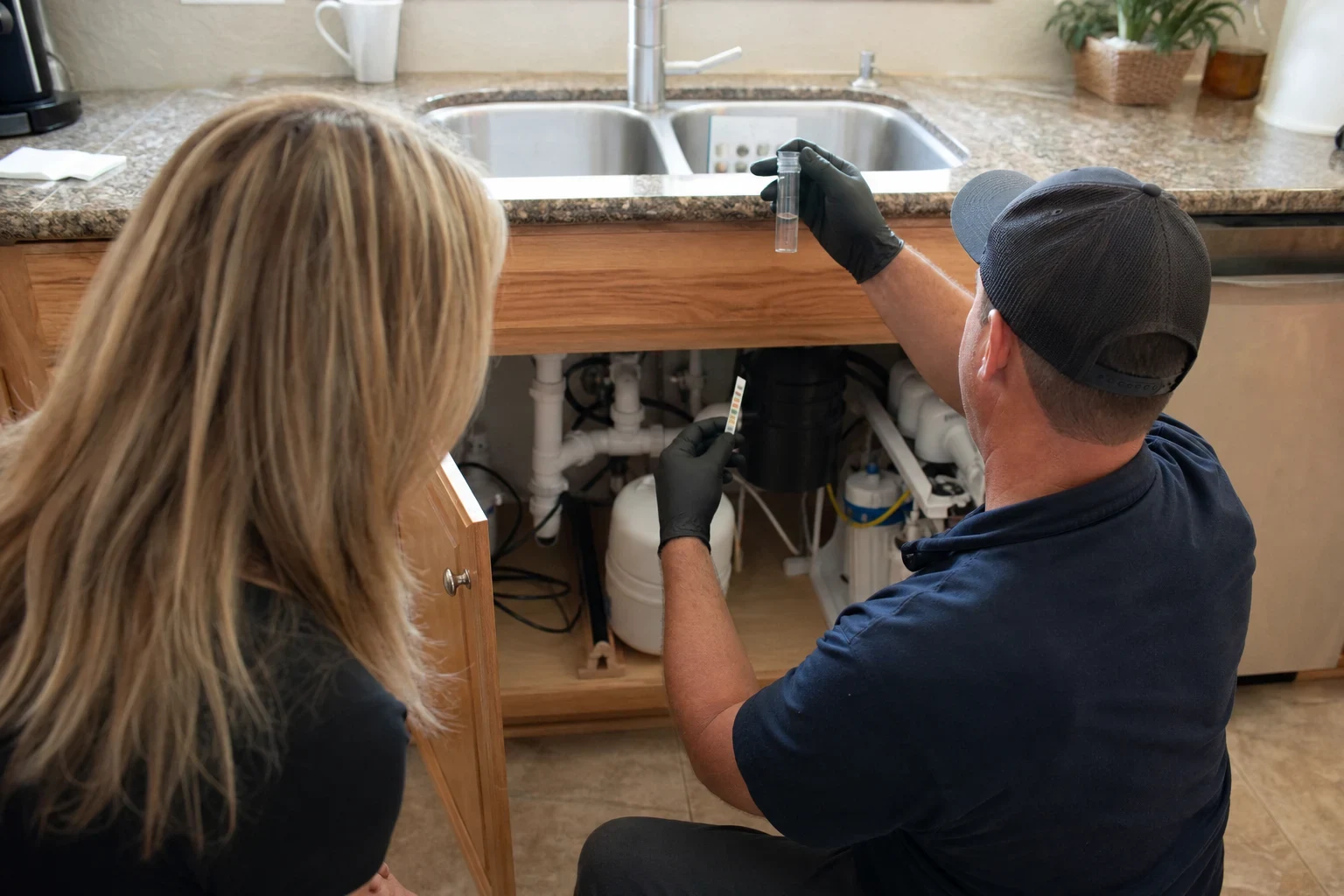
We check hardness, chlorine and a few other basics. You see the numbers and we explain each one in everyday words.
- 2
Your price by phone
We tell you which system fits, what it removes and what it costs installed. No pressure to decide on the call.
- 3
Install day
Our plumber turns off the water, adds the bypass loop and sets the tank, most often close to where your main line enters the house. Fresh media gets rinsed until the water comes out clear. Then each joint is checked for drips.
- 4
Walkthrough and cleanup
We show you how the bypass works and when the media will need changing. Old fittings and packaging leave with us.
What moves the price
There's no single price for a whole-home filter because homes differ. The things below are what change the number. We go through each one with you before you agree to anything.
- Size of your home
- More bathrooms and more people mean more water at once. A bigger tank keeps pressure up when two showers and the washer run together.
- Type of media
- Catalytic carbon for chloramine costs more than standard carbon. Your test result decides which one you need.
- Location of your main line
- If the main line sits out in the open, say along a garage wall, the job goes faster. If it needs rerouting or extra pipe to reach a good spot, that adds labor and parts.
- Pairing with other equipment
- Adding a sediment stage, or setting the filter ahead of a softener, changes the parts list. We only add what your water calls for.
Common questions about whole-home filters
Will my water pressure drop with a filter on the main line?
Not when the filter is the right size. We match the tank to the most water your household draws at once. Pressure loss comes from a filter that's too small, and we won't put one in.
Will I need a softener as well?
Possibly not. Carbon takes care of taste and odor, but it does nothing for hardness. When your test shows hard water and scale is bothering you, a softener is its own job. When hardness is low, we'll say you can skip it.
When does the media have to be replaced?
That comes down to your water use and what the system is rated for. On install day we give you a likely schedule for your household. With the bypass valve, swapping it out is easy.
If city water already passes the rules, why filter it?
City water is safe to drink. Most homeowners add a whole-home filter because the taste or smell bugs them, not over safety. If neither bothers you, you might not need one.
Is there a warranty on the installation?
Yes. The installation and labor carry a 5-year warranty. If any of our work leaks or fails in that window, you're covered.
Are there reviews of your work?
Yes. Our Google listing has 3 five-star reviews right now. It's not a long list, and we're upfront about that. The best way to judge us is a water test, where you can hear how clearly we explain your numbers.
Find out if a filter is the right fix
Start with a free water test with zero obligation, or ask us for the installed price of a whole-home system. Either way you'll know what's in your water and what it would take to change it.