ServicesWater Softeners
Water Softeners in Youngtown, Sized From Your Own Water Test
Hard water leaves chalky rings on your fixtures and builds scale in pipes and appliances. A softener stops that buildup. We check your hardness with a free test, show you the reading, then size a system for your home and explain the upkeep in plain words.
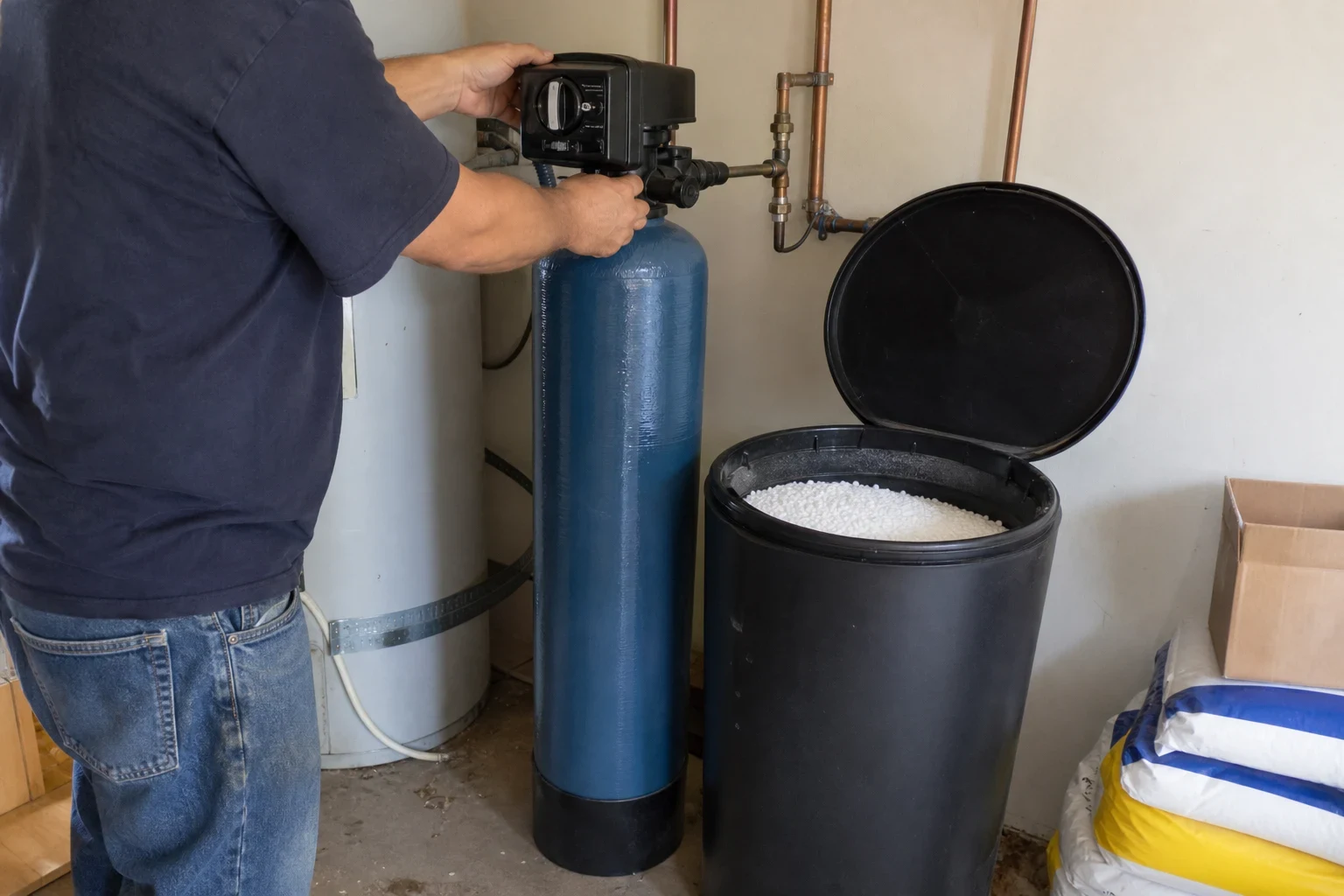
What a Softener Does, in Plain Terms
Calcium and magnesium ride along in hard water. Heat the water or let it dry on a surface and those minerals get left behind as scale. Inside a softener, a tank of resin beads trades them out, so the water flowing to your taps carries much less of what builds up.
A softener does not filter taste, odor or chlorine. If that is your main complaint, whole-home filtration or an under-sink reverse osmosis system may be the better fit, and some homes use a softener alongside one of them. We tell you which one your test points to.
The plumbing work is done by partner plumbers who carry their own license and insurance. The install is included with the system, so you get one price for the softener in place and running.
What You Get With a Softener Install
- Hardness tested at no charge
- You pay nothing for the test and aren't tied to anything afterward. Your hardness reading comes before any talk of equipment.
- A tank sized for your home
- Tank size comes from your hardness reading, the number of people in the house and your water use. An undersized unit regenerates all the time. An oversized one leaves the resin idle too long between cycles.
- Connection at the softener loop
- Many houses have a softener loop already plumbed by the garage or water heater. When yours has one, we hook up there. When it doesn't, we walk you through what the plumber has to add before you say yes.
- Bypass valve and rinse drain
- Every softener comes with a bypass valve. One turn sends water around the tank, so your home still has water while the softener is serviced. The rinse line runs through a proper air gap, keeping wastewater from flowing back into the unit.
- Programming and a walkthrough
- We set the valve to your hardness, load the brine tank and start the first cycle. Then we point out where salt goes, how to read the display and what to look at once a month.
How to Tell a Softener Could Help
White crust that won't stay gone
The chalky ring around a faucet base or showerhead is leftover mineral. Hard water brings it back within days of cleaning.
Dull, filmy glasses
Dishes come out of the dishwasher hazy, and shower glass picks up a film. These are usually the first things people notice.
Noise from the water heater
Popping or rumbling from a tank water heater tends to mean scale has collected at the bottom. That buildup slows heating too, so the burner or element works longer for the same hot water.
Soap that barely suds
Hard water works against soap. It takes more shampoo and detergent, and your skin may feel tight or dry after showering.
One fixture running slow
Scale can plug aerators and showerheads until one tap barely flows. A cleaning buys some time, but the water itself is the source.
How a Softener Install Goes
- 1
Free water test
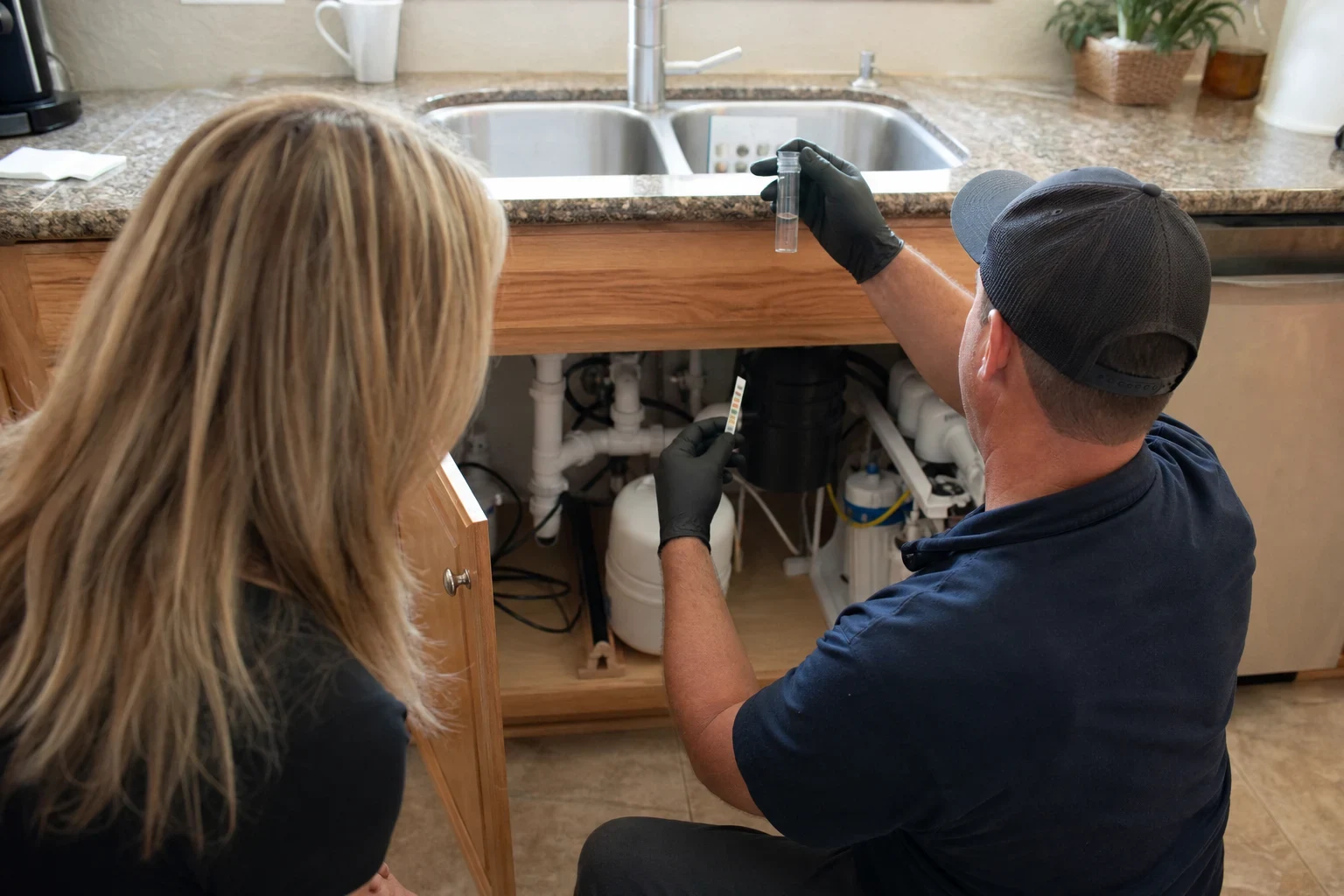
We test hardness at your tap and look at your plumbing, the softener loop if there is one, a nearby drain and an outlet for the control valve.
- 2
Your installed price by phone
We explain the system size we recommend and why, then give you installed pricing. If your reading comes back low, we say so and you skip the softener.
- 3
Install day
Water is off for a short stretch while the plumber connects the tank, bypass and drain. We lay down covers where we work and clean up when we finish.
- 4
First cycle and walkthrough
We run the softener, check the water coming out of it and show you how salt, settings and the bypass work. You leave knowing what to watch for.
What Moves the Price of a Softener
There is no single price for a softener, because homes and water differ. The install is included with the system, so your quote covers the equipment in place and running. These are the things that change the number.
- Hardness and number of people
- The harder your water and the more people using it, the bigger the resin tank needs to be. A bigger tank costs more up front but runs fewer regeneration cycles and goes easier on salt.
- Existing loop or new plumbing
- A ready softener loop keeps the install simple. Without one, the plumber has to tap into the main line, which adds time and parts.
- Where the drain and outlet sit
- Every regeneration flushes rinse water away, so the unit has to be near a place to send it. The control valve also plugs into a standard outlet. When both are far from the spot you want, running them adds time to the job.
- Valve type
- A metered valve regenerates based on the water you actually use. A timer valve runs on a set schedule. We explain the difference and price both if you want to compare.
Questions About Water Softeners
Something not covered here? (480) 906-2640
Will a softener make my water safe to drink?
No. It takes out hardness minerals, not contaminants. For cleaner drinking water, the usual choice is reverse osmosis at the kitchen sink, and plenty of homes have both.
How often will I buy salt?
That depends on your hardness, how much water you use and the valve settings. We set it up so salt isn't wasted and give you a rough idea of when to look in the brine tank. Most people add more when it gets low.
Does soft water feel slick?
At first, some people feel a smoother rinse in the shower. That's soap washing away with no minerals to hold onto. Most stop noticing it after a week or two.
Who handles the plumbing?
A partner plumber does the plumbing work. We handle the test, the sizing and the walkthrough, so you have one point of contact from your first call through the last cycle.
What happens if there's a problem after the install?
Installation and labor on your softener are covered by a 5-year warranty. If a fitting or the drain line acts up, give us a call and we'll fix it under that warranty.
Are there reviews from past customers?
Yes, we have 3 five-star Google reviews so far. A better check is to call us, ask what you want to know and see if our answers make sense to you.
See Whether a Softener Makes Sense for You
It starts with a free hardness test. You see the reading and what it means, and you get installed pricing only when a softener is the right call.