ServicesReverse Osmosis
Reverse Osmosis in Youngtown, Explained Before It's Installed
Reverse osmosis gives you clean drinking and cooking water from one faucet at your kitchen sink. We test your water first, tell you what an RO system will and won't change, and give you installed pricing so you know the full number before anything is drilled.
What Reverse Osmosis Actually Does
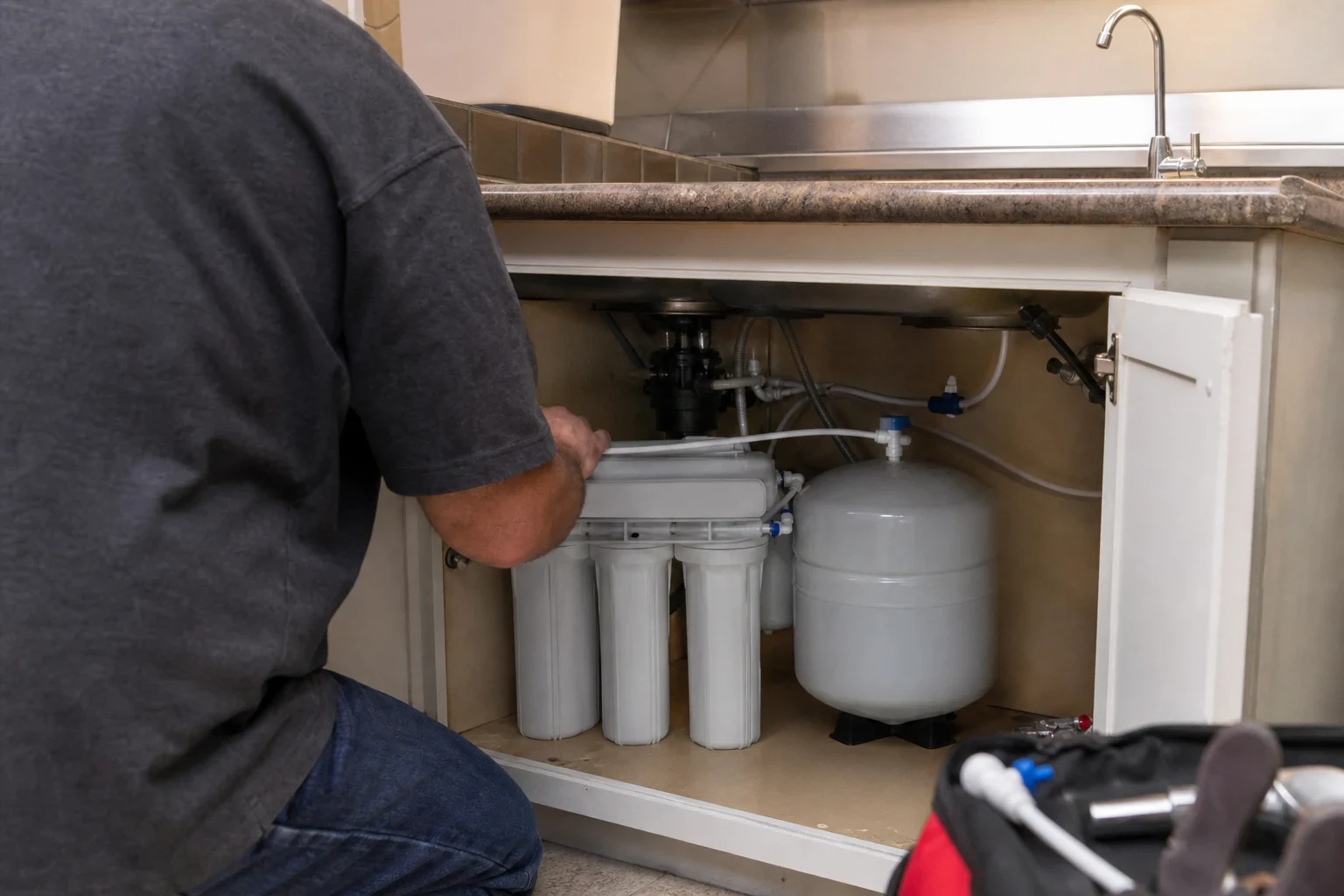
An RO system sits in the cabinet under your sink. Water passes through a sediment filter, then a carbon filter, then a membrane with pores so small that most dissolved minerals, salts and many trace contaminants can't get through. The filtered water is stored in a compact tank under the counter until you open the separate faucet beside your main one. The leftover water carries what was filtered out down the drain.
It is a point-of-use system. That means it treats the water you drink and cook with, not your showers or laundry. If your whole house has chlorine taste or scale problems, whole-home filtration or a water softener handles that job. Hard water also wears on an RO membrane, so some homes pair RO at the sink with a softener ahead of it.
We'll tell you plainly which setup fits your water. Sometimes RO alone is the right call. Sometimes it isn't.
What Comes With an RO Install
- The full filter train
- Sediment prefilter, carbon prefilter, the RO membrane and a carbon polishing filter after the tank. Each stage has a job, and we show you which is which so you can change them later.
- A dedicated faucet
- We mount it in an existing sprayer or soap hole when you have one. If not, we drill the counter and seal around the base.
- Drain line with an air gap
- The wastewater line ties into your sink drain with a saddle fitting. An air gap keeps dirty drain water from ever backing up into the clean side.
- Tank set and pressure checked
- We check your incoming water pressure, since the membrane needs enough push to work well. If it runs low, we'll explain whether a booster pump makes sense.
- A line to the refrigerator, if you want one
- RO water can feed your fridge dispenser and ice too. We run tubing from the system to the back of the fridge, then check every connection for drips before we pack up.
- Install included, labor backed
- Install is included with our water treatment systems, so the installed price is the price. Installation and labor carry a 5-year warranty.
When RO Starts to Make Sense
Cases of bottled water keep showing up
If your family hauls home water from the store because nobody likes the tap, RO usually ends that chore. One faucet covers drinking, coffee and cooking.
White crust on the kettle or coffee maker
That crust is dissolved minerals. RO takes most of them out of the water you heat and drink.
A high reading on your water test
Total dissolved solids, or TDS, measures everything dissolved in the water. A high number is a good reason to consider RO, and our free test shows yours.
Cloudy ice and odd taste
Cloudy cubes and a flat or salty taste often come from minerals. RO water makes clearer ice and plain-tasting coffee.
Older plumbing in your home
If you have concerns about old pipes or fittings, RO adds a strong last barrier at the faucet you drink from.
How the Job Goes
- 1
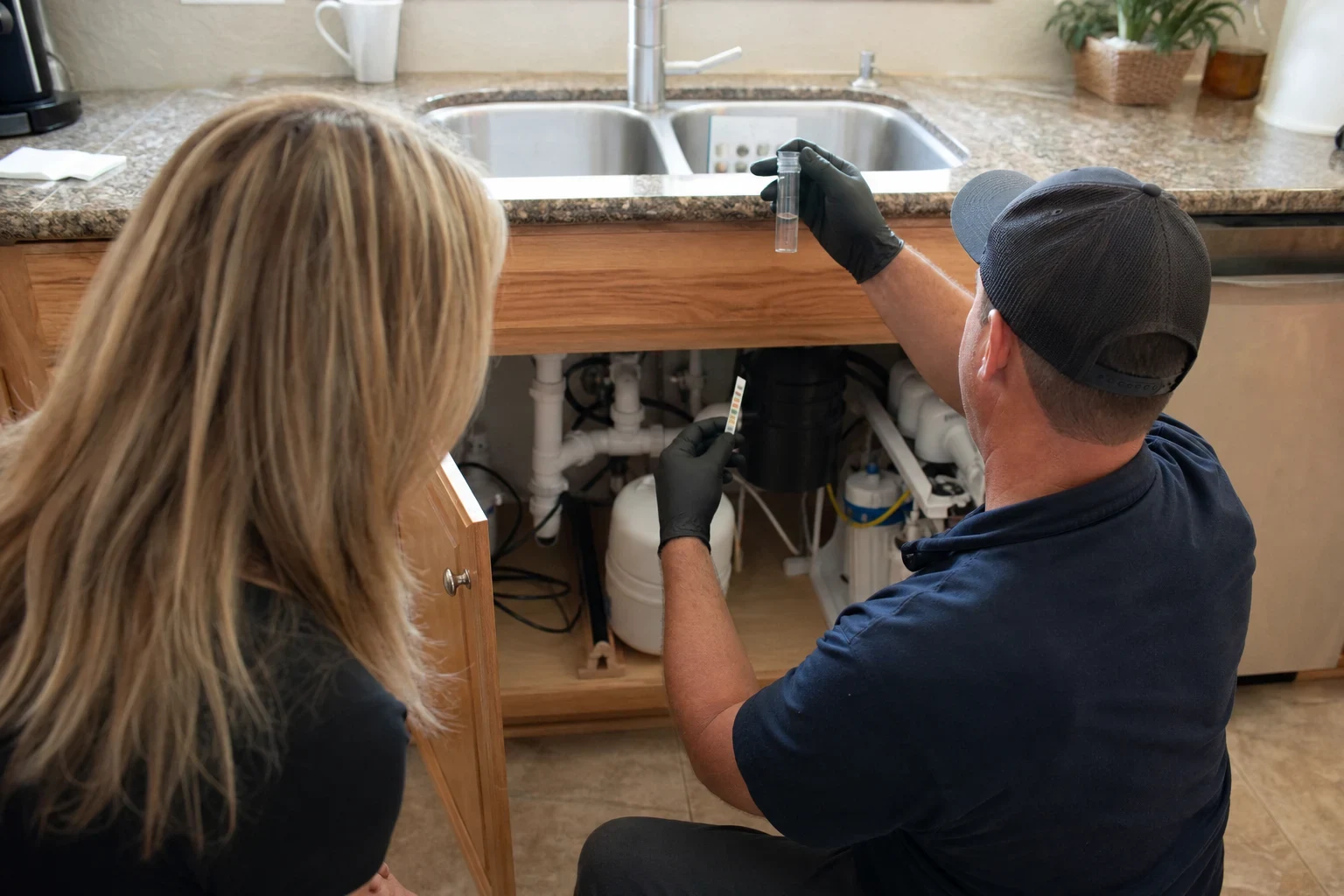
Free water test
We test your water at no charge and with zero obligation. We go over the readings with you in plain words and tell you if RO is a fit.
- 2
Pick the system and get your price
We walk you through tank versus tankless, the faucet options and any extras like a fridge line. You get the installed price by phone before we schedule.
- 3
Install day
We shut off the cold line under your sink, mount the filter unit, set the faucet and connect the drain with its air gap. Most installs fit inside a morning, and we clean the cabinet out when we're done.
- 4
Flush and walkthrough
The tank needs a couple of hours to fill the first time, and the first batch gets flushed. We show you where each filter is and how often to change it.
What Moves the Price of an RO System
Most of the cost is the system itself. The rest depends on your sink, your counter and what else you want connected. We'll give you one installed number by phone, with each part named.
- Tank or tankless
- Standard tank systems cost less. Tankless units take less cabinet space and refill faster, but cost more up front.
- Your countertop
- Laminate drills easily. Granite and quartz need a diamond bit and more care, which adds time if there's no existing hole to use.
- Extra lines and add-ons
- A fridge or ice maker line, a remineralizing stage or a booster pump for low pressure each add to the total.
- What your water needs first
- Very hard water wears out a membrane faster. If a softener or whole-home filter ahead of it makes sense, we'll say so and explain why.
Reverse Osmosis Questions We Hear
Something not covered here? (480) 906-2640
Does reverse osmosis waste water?
Yes, some. The membrane has to be rinsed constantly to keep the stuff it catches from building up, and that rinse water leaves through the drain line. Today's models are a lot more efficient about this than the units from years back. We'll tell you the ratio for the model you pick so there are no surprises.
Does RO strip out the good minerals?
It removes most minerals, good and bad. Most of what your body needs comes from food, not water. If you prefer the taste of some minerals, a remineralizing stage puts a little calcium and magnesium back in.
How often do the filters need changing?
Prefilters are usually changed every 6 to 12 months. The membrane often lasts 2 to 3 years, sometimes less with hard water. Changing them is simple, and we show you how on install day.
Do I need a water softener too?
Not always. A softener protects your whole home's pipes and appliances, while RO only treats one faucet. If your test shows hard water, a softener ahead of the RO helps the membrane last longer.
Who does the install?
Installs done by licensed and insured partner plumbers. They set the fittings, the drain connection and the faucet, then check for leaks with you before they leave. If something they put in gives you trouble later, give us a call and we'll get it looked at.
What do past customers say?
We have 3 five-star Google reviews so far. We'd rather earn the next one by explaining things clearly than by talking you into equipment.
Find Out If RO Fits Your Water
Start with the free water test. We'll read the results with you, tell you plainly if reverse osmosis is the right call and give you installed pricing over the phone.